1909 Indian Head Penny Value: What Is It Worth in 2026?
Worth selling individually: list it on eBay or offer it to a local coin dealer. Grading fees would eat the profit at this level, so sell it as-is.
Value by condition
| Good (G-4, heavily worn) | $12 |
| Very Good (VG-8) | $19 |
| Fine (F-12) | $21 |
| Very Fine (VF-20) | $25 |
| Extremely Fine (XF-40) | $30 |
| About Uncirculated (AU-50) | $38 |
| Mint State (MS-63, uncirculated) | $103 |
The last Philadelphia Indian Head cent — and 1909 is the year the Lincoln cent replaced it. Saved in large numbers, so it is the most affordable 'last year of issue' coin in the hobby.
What a 1909 Indian Head penny looks like
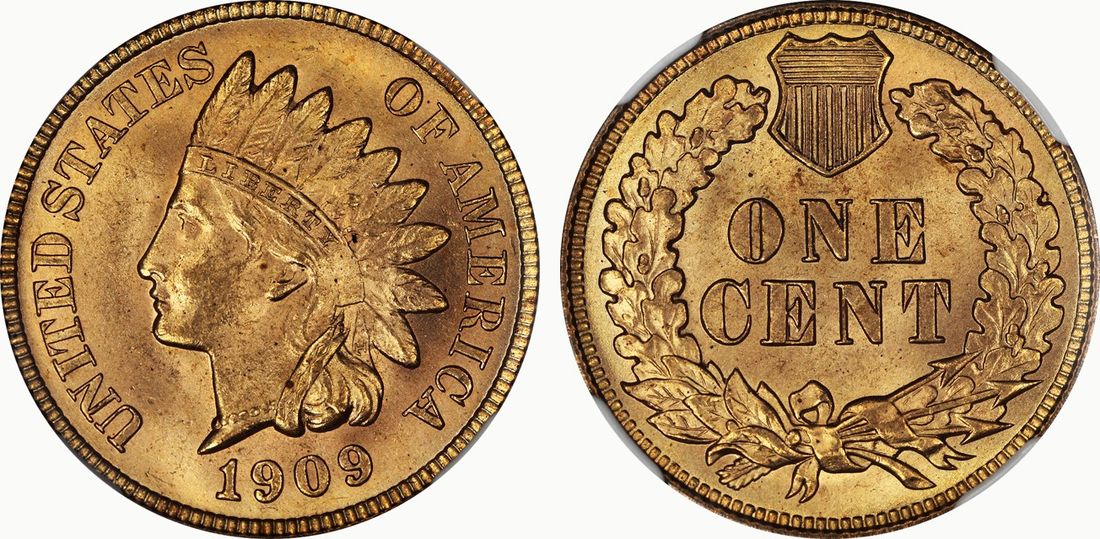
Your 1909 looks exactly like this, with no letter anywhere — Philadelphia never marked these cents.
1909 Indian Head penny — no mint mark?
Your 1909 Indian Head penny has no letter on it — and that is correct. Every Indian Head cent was struck at the Philadelphia Mint, which did not mark its coins. The only Indian Head pennies with a mint mark are the 1908-S and 1909-S, which carry a small S under the wreath on the back. No letter anywhere means Philadelphia, so the price table above is exactly the one to use.
In worn condition that puts your coin around $12, rising to $103 in uncirculated mint state. This year also has variety versions — check the related links below.
The most affordable "last year of issue" in coin collecting
The 1909 Philadelphia Indian Head cent closed a 50-year design run — and unlike most final-year coins, it is cheap. Over 14 million were struck, and because everyone in 1909 knew the design was ending, enormous numbers were saved. A worn example costs a few dollars; even uncirculated coins are within reach of most collectors.
That combination — historic significance, last-of-series status, and genuine affordability — makes the 1909 Indian Head the classic 'first old coin' purchase. If you found one in a jar or inherited a small collection, it is a wonderful coin to keep, even if it will never fund a vacation.
One thing to check before you move on: flip it over. If the reverse shows two wheat stalks instead of a wreath and shield, your 1909 is actually the first-year Lincoln wheat penny — a different series entirely, covered in the wheat penny section of this site.
How to confirm it's genuine
- The date is on the obverse below the portrait. Only 1908-S and 1909-S carry a mint mark (under the wreath on the reverse) — every other year is Philadelphia with no mark.
- Never clean the coin: cleaning destroys the original surface and can cut the value in half.
- For any coin worth more than $200, PCGS/NGC grading fees (~$20–50) are money well spent.
Where to sell this coin
- eBay works best in the $1.00–$200 range. Take clear photos of both sides in natural light, and put the year, variety, and approximate grade in the title.
- A local coin dealer is the fastest way to cash out, but expect 60–70% of guide prices. Common-date Indian Head pennies sell well by the roll or in mixed lots.
- Graded high-value coins do best at auction houses like Heritage Auctions or Stack's Bowers, where realized prices are public.